
 EN
 PL (PL)

If you’re renovating, you’ve surely wondered when to install interior doors. Does it matter? Yes! And contrary to what you might think—it matters a great deal! Read on to learn more.
Installing interior doors is actually one of the final stages of a renovation or redesign. During the project, literally anything can change—the solutions you’ve chosen may turn out to be impossible to implement, and a room layout that previously seemed ideal may suddenly change significantly. In such a situation, installed doors may not only hinder the work but also get damaged or simply fail to match the final look of the room. You can easily avoid these problems. Find out when to install interior doors!
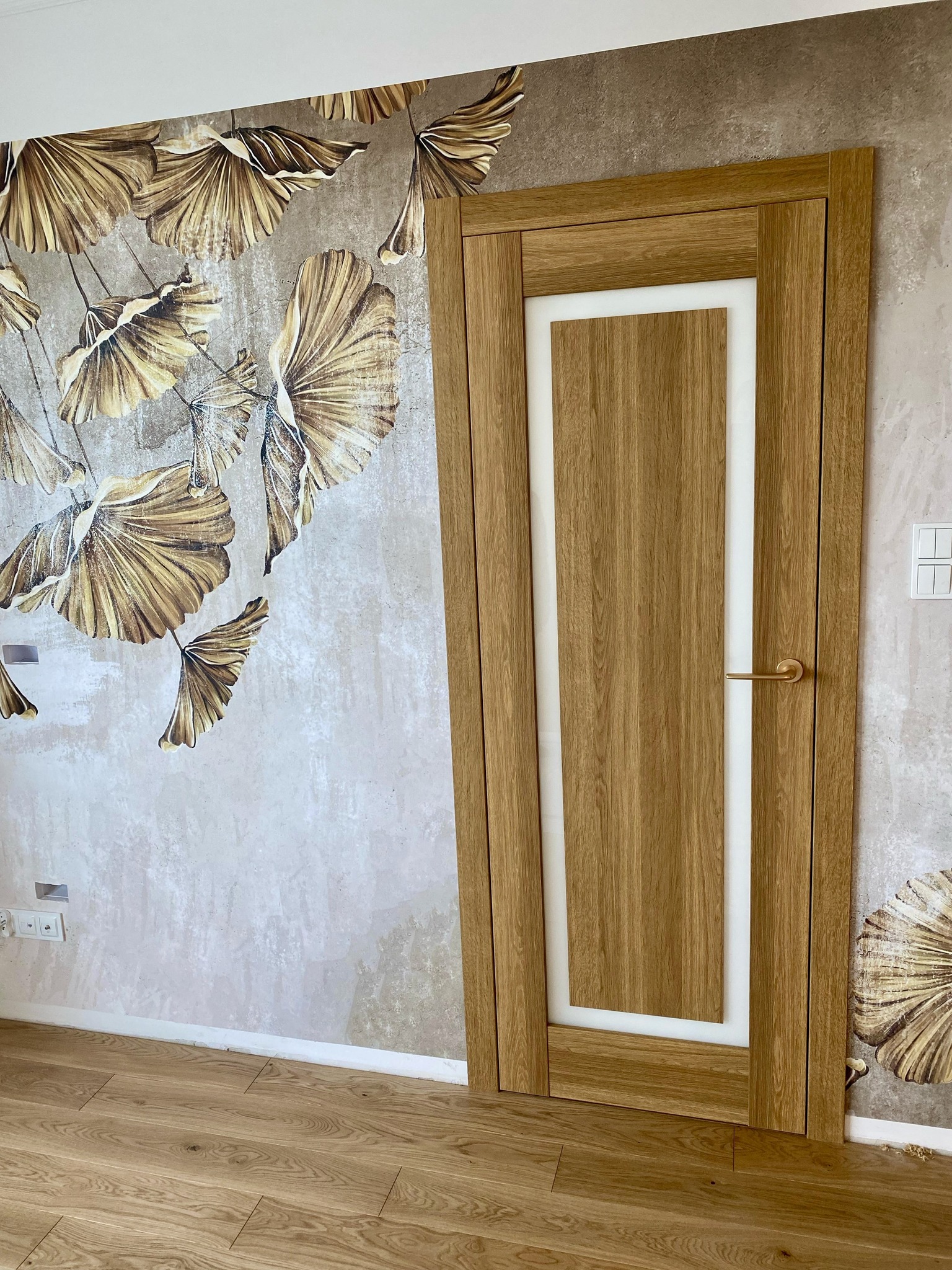
>>See also: Wooden or MDF doors? Choosing interior doors
Installing interior doors during home construction
Bringing a house under construction to the so-called “shell” stage is just the beginning of the finishing work. The location and size of interior doors should be carefully considered as early as the room layout stage. Even if “the die has already been cast,” you still have some leeway and can make minor changes to the partition walls—you can widen the door frame or install a sliding door system in the wall. However, such changes should be made before the walls are plastered and painted, and certainly before the doors are installed!
>>See also: When to Install Exterior Doors? What’s the Best Time?
Renovating? Find out when to choose and install interior doors
Renovating is technically not much different from furnishing a house or apartment that you’ve inherited in a shell condition. Unfortunately, in this situation, you have fewer options for drastic changes. Changing the location of a door is practically impossible due to the utilities running through the walls. Changing the size of the door opening is also out of the question, so you’ll inevitably have to choose models that match the dimensions of your old doors.
Remember that you should leave the installation of interior doors for the very end of the project, once you’ve smoothed and painted the walls. Otherwise, you’ll end up with doors that may not necessarily match the rest of the room.
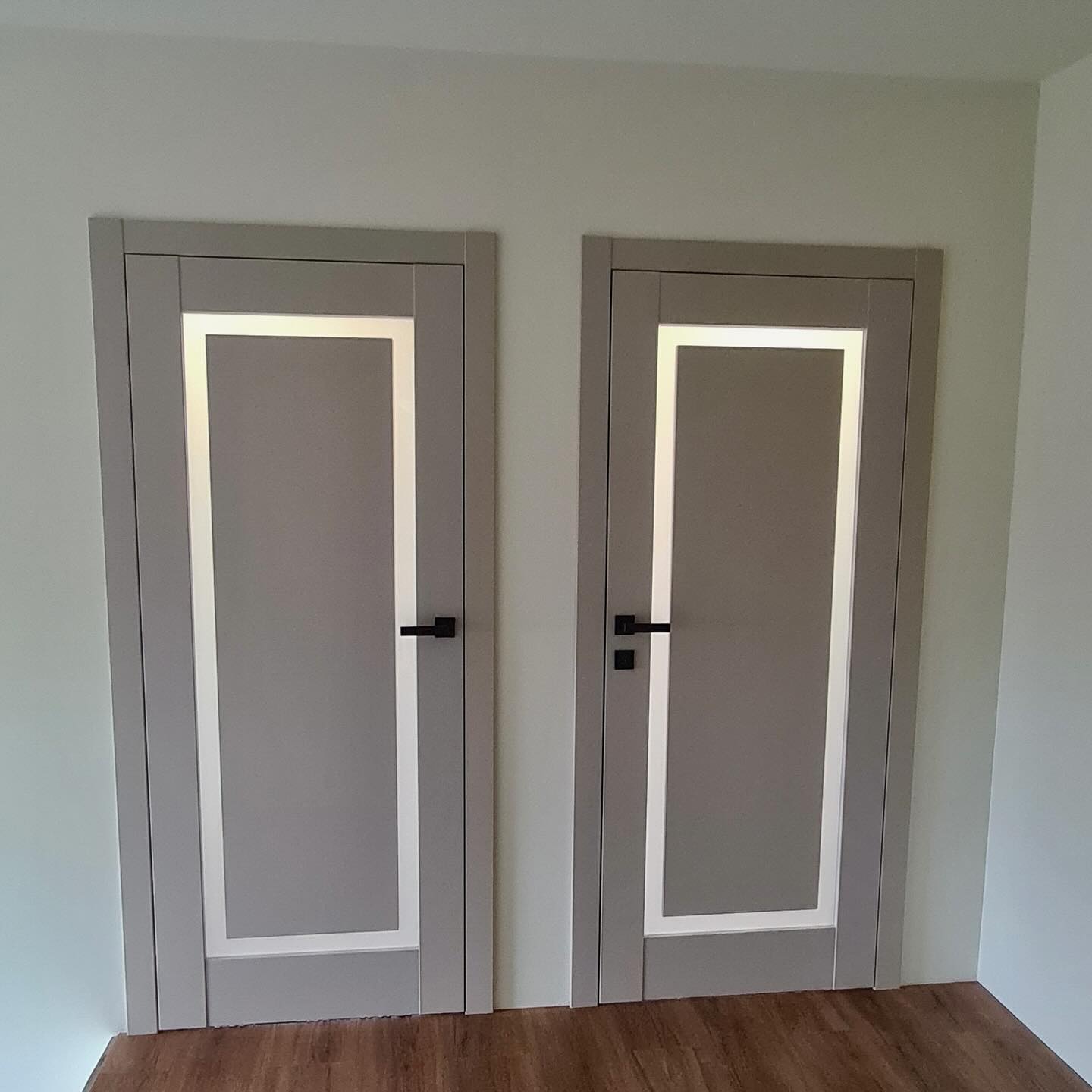
How do you prepare for installing interior doors?
- Finish all work related to preparing the floors and walls. The so-called “wet work” (applying plaster, finish coat, and paint) must already be complete, and the room itself must be well-ventilated and dry. Install the doors a few days after you’ve finished painting the walls. Before that, the humidity in the room will be too high!
- Make sure the wall is dry as well. Otherwise, you risk warping (damage) to the door frame. At best, this will make the door difficult to use; at worst, it will prevent it from opening or closing at all.
- Before installing the door frame, consider whether you’ll need to run wiring, for example, between rooms. This is a good time to drill holes and cover them neatly.
How do you install interior doors?
How do you go about installing interior doors yourself? First, measure the door opening carefully. Determine whether the existing door frame needs to be replaced. If it’s old, damaged, or you simply want to replace it, replace the door along with the door frame. There’s also nothing stopping you from installing the door into a door frame that’s already in the door opening.
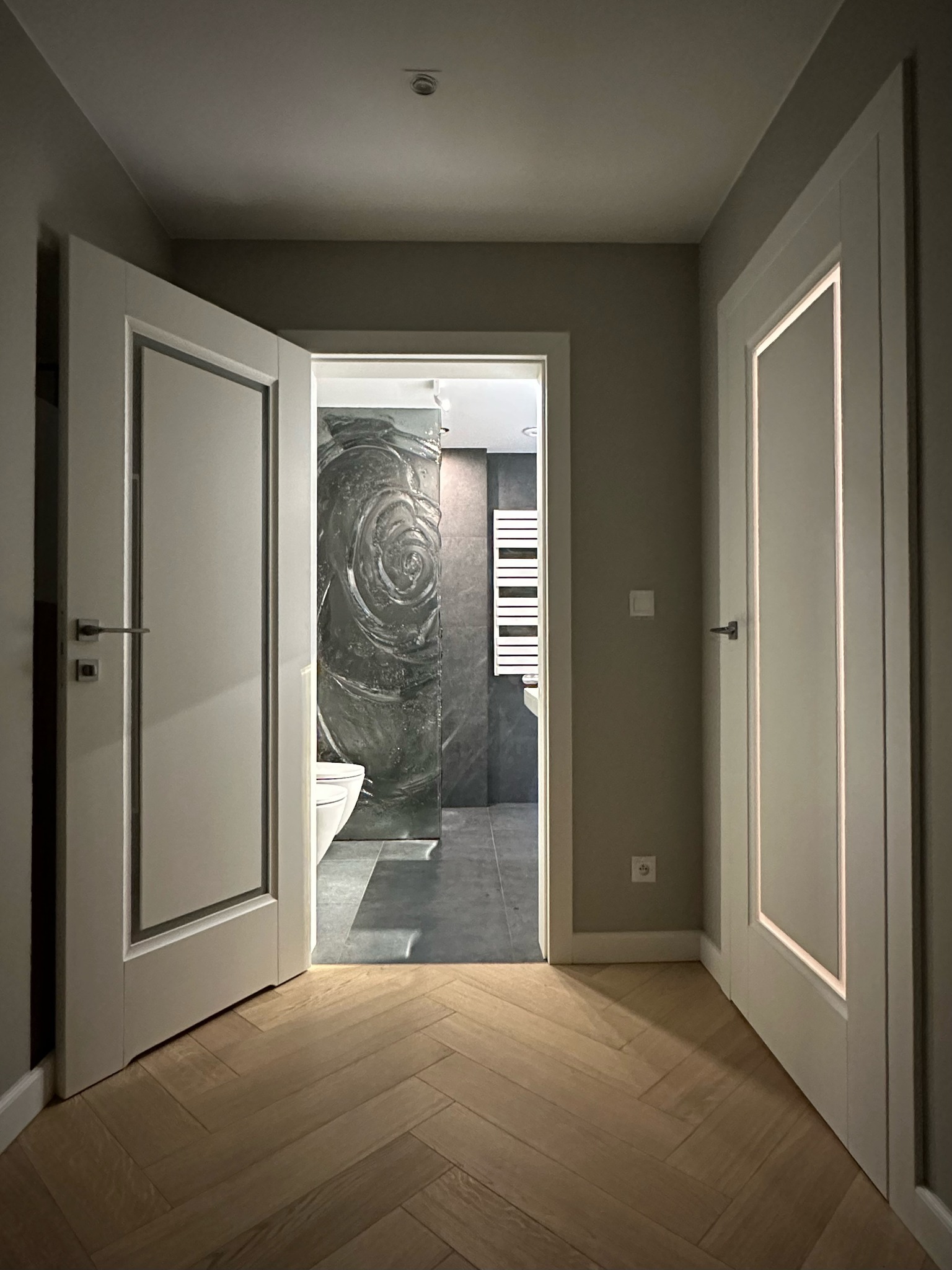
Replacing and Installing the Door Frame
If you’ve decided to replace the door frame as well, carefully measure the thickness of the wall. You can install fixed door frames where the walls are of standard thickness. If the wall is a non-standard thickness, you’ll need to choose an adjustable door frame for the door, whose width you can adjust to match the wall’s thickness. How do you install a door frame step by step? Here are the instructions:
- Leave about 1 cm of clearance between the door frame and the wall. Secure the door frame in place; you can use wall anchors or wedges for this. Once secured, carefully check that it is plumb and level;
- Screw the door frame to the wall; this will ensure the door is securely mounted. First, drill holes in the door frame itself that will go into the wall. Drive the wall anchors in with a hammer (gently!) and tighten them with a screwdriver or power drill;
- Install several (3 to 5) spacers between the vertical frame members. They must be the same width as the clear width of the door frame. These struts will help keep the door frame in place while you apply the installation foam;
- Protect the edges of the door frame with painter’s tape;
- Apply the foam in small portions. If you’ve chosen high-expansion foam, fill no more than half of the opening so the material doesn’t warp the door. If it’s low-expansion foam, apply more of it. The latter type of foam is a better choice because it significantly reduces the risk of warping the door frame;
- Remove the wedges and fill the rest of the gap with foam. Once it’s dry, remove any excess foam with a knife (do this carefully so as not to scratch the door frame!);
- If you’ve measured the door frame and door correctly, you can hang the door of your choice. It’s not difficult, but you’ll need help from another person;
- To adjust the hinges, you’ll need an Allen wrench and a screwdriver. After each adjustment, check to make sure the door opens and closes smoothly.
How can you avoid problems when installing a door?
Installing a door inside your home isn’t difficult, as long as you keep a few important things in mind. First and foremost, don’t forget when to install interior doors—if you rush the purchase or the installation itself, it will make the rest of the work much more difficult. As if that weren’t enough, the final aesthetic result may leave much to be desired. Doors should be installed after more important work is completed—they aren’t essential during the renovation anyway. Proper door installation takes a bit of effort, but the result will be worth it!
Interior doors from Barański Drzwi—we create them just for you!
You’ll find our interior door products in two distinct series. The first is Optimo Interior Doors—a great choice if you’re looking for something in the mid-range price category that’s still high-quality. The abrasion-resistant veneers will keep the door in impeccable condition for many years. If you have a larger budget for interior doors, check out the Premium Interior Doors series. This is our longest-standing product line, crafted from pine wood and wood-based materials—customers have been appreciating these models for many years.