 EN
 PL (PL)

A door frame, also known as a door jamb, provides a practical and stylish border for a door. The basic types consist of three parts: a top lintel and two vertical jambs. Before you buy door frames, find out what to look for!
When choosing a door, most attention is paid to the main door leaf—its aesthetic and functional qualities. However, these qualities depend largely on the type of door frame installed. This applies to both interior and exterior doors. Hinges and lock components are mounted in the door frame jambs. Do you want a door that fits perfectly against the wall, without even a millimeter of gap? Or perhaps you’re thinking about sliding doors? Find out which type of door frame is best suited for your project and which accessories will enhance their appearance and functionality!

Fixed or adjustable door frame?
To a large extent, the choice depends on the wall where the door will be installed. The key factors are the wall thickness and the dimensions of the wall opening. Fixed door frames have a strictly defined width, usually between 45 and 90 mm. For this reason, the door frame may not cover the entire wall within the installation opening. This problem does not arise with adjustable door frames. Here, the range of adjustment is much wider, although the wall must be at least 7.5 cm thick. For wall thicknesses up to 30 cm, an adjustable door frame consists of a single piece, while for the widest walls (e.g., 50 cm), a frame with a joint is required. The width adjustment range for door frames is usually up to 2 centimeters.
Rebated door frame or non-rebated door frame?
The difference here lies in the placement of the door mounting hardware. A rebated door frame has the hardware on the outside, while a non-rebated frame has it, so to speak, inside the wall. Adjustable door frames make it easier to “hide” the hinges inside, which looks great, especially in modern interiors. Fixed door frames in the low and mid-price ranges usually do not offer this option. Only the highest-quality doors allow for the use of fixed non-rebated door frames.

Door frames for sliding doors—what sets them apart from the rest?
Where hinged doors would take up too much space when opened, it’s worth considering a sliding system. These types of solutions come in two basic variants:
- wall-mounted, with a tunnel-type door frame;
- in-wall, with a specialized cassette.
In both cases, the door panels slide in a straight line along horizontal tracks. A typical tunnel-style frame is 7.5 to 50 cm wide. Cassette systems, on the other hand, require significant work to adapt the wall so that the doors can retract into it. An alternative solution is to build an additional drywall structure that will conceal one or two door panels when the doors are open.
Door frames are made of MDF panels, steel components, and other materials
Each door frame must meet certain technical requirements, depending on the location and method of door installation. The frame must support the door’s weight, fit snugly against the wall, and withstand the rigors of daily use—such as accidental impacts. The material used to make the door frame is often exactly the same as that used in the door itself. The beams and bases are made of:
- solid wood;
- laminated wood;
- MDF (such a door frame is highly resistant to moisture);
- galvanized sheet metal;
- PVC profiles (additionally reinforced with steel sections);
- aluminum;
- steel.
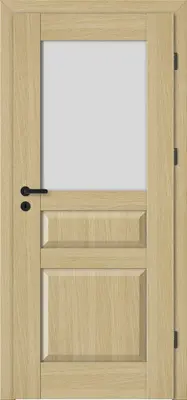
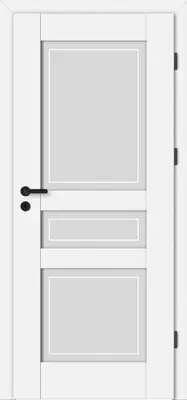
When finishing door frames, their outer layer is most often covered with a special PVC film or a lacquered HDF panel in a color chosen by the customer. Doors and frames with a thin pane of frosted glass are also gaining increasing popularity. The overall look is exceptionally modern.

Door Frame Installation—How to Achieve the Most Aesthetic Result?
A glass panel isn’t the only way to improve the appearance of a door frame. The most common approach is to use masking strips as part of the installation, joined in several ways. Typically, the strips meet at a 45- or 90-degree angle. Another solution is to completely conceal the door frame, for example, with a layer of plaster or drywall. Door manufacturers offer, among other things:
- large wall panels;
- decorative frames;
- several types of thresholds;
- additional hinges;
- stylized magnetic locks;
- soundproofing gaskets.
What should you look for when choosing doors and door frames?
It’s hard to single out one parameter that’s clearly more important than the others. Quality is inextricably linked to durability as well as price—keep in mind that any modifications or additions that improve functionality and aesthetics come at an extra cost. For example, prices range from 10 PLN for a single concealed hinge to 200–300 PLN for a moisture-resistant door frame. When it comes to purely technical matters, keep the following recommendations in mind:
- Carefully measure the installation opening in the wall.
- Measure the thickness of the wall and use the highest value.
- Check which door frames have matching dimensions or an appropriate adjustment range.
- If you opt for a fixed door frame, keep in mind that it must be the same width as the door leaf.
- When installing an adjustable door frame, secure the gaskets tightly and eliminate any gaps.
Adjustable and fixed door frames in the Barański Doors catalogs
Our product range includes a wide selection of parts and accessories. Each door frame is available in several variants to ensure the final result meets your expectations. Door frames fall into the following quality and functional categories:
- Barański Premium line – interior wooden doors:
- classic sliding system with a tunnel-type door frame;
- loft-style sliding system with a self-closing mechanism;
- Discreet concealed system with a steel door frame;
- fixed rebated door frame;
- adjustable rebated door frame;
- adjustable non-rebated frame;
- reversible adjustable door frame;
- Barański Premium line – wooden exterior doors:
- fixed rebated door frame;
- fixed non-rebated door frame;
- Glass fixed non-rebated door frame;
- Barański Optimo line – veneered interior doors:
- adjustable rebated door frame;
- adjustable non-rebated door frame;
- reversible adjustable door frame;
- fixed rebated door frame;
- fixed non-rebated door frame;
- Barański Smart line – stairwell and utility doors:
- fixed rebated door frame;
- fixed rebated door frame with a one-sided adjustable strip;
- adjustable rebated door frame;
- adjustable rebated door frame PLUS (with a wider strip and no step at the joints).
Need more details? We encourage you to browse the latest Barański door catalogs and contact our representatives! Our expert consultants will help you choose the best doors, door frames, handrails, transoms, and other components!