 EN
 Polski (PL)
 Deutsch (DE)

Buying the right doors for your house or apartment is quite a challenge. It requires a lengthy analysis of available options, followed by the selection of a specific model, hardware, and any additional features. Another factor to consider before making a purchase decision is the door’s finish. A popular and practical solution is synthetic veneer. Not only does it help protect the door from damage and make maintenance easier, but it also has a key impact on its appearance.
In the past, synthetic veneers could be off-putting due to their poor aesthetics and limited selection of designs. However, those days are long gone. Today, the selection is more extensive than ever, and the new generation of synthetic veneers truly impresses with its appearance and is an excellent solution for many door models. This abundance has really only one drawback—it can make your head spin. Especially when, before making a choice, you have to familiarize yourself with the “strange” acronyms that manufacturers and retailers use to describe their products. These include designations such as CPL, HPL, PVC, PP, and CLPL.
CPL, PP, PVC... What Do These “Mysterious” Abbreviations Mean?
These abbreviations describe the method and materials used to manufacture specific laminates. There’s no need to delve into all the technical details of each technology, but it’s helpful to have a general understanding of what each solution entails. CPL and CLPL are laminates made of layers of cellulose fibers, decorative paper sheets, and resins used to impregnate them. HPL, on the other hand, is a highly durable thermosetting material composed of multiple layers of paper, PP is polypropylene, which is distinguished by its flexibility, and PVC is polyvinyl chloride—a popular material with a wide range of applications that provides good insulation. 
Veneers differ not only in terms of production technology but also in quality parameters, such as weight per square meter and flexibility
Although these types of acronyms tell us what a given laminate is made of, they do not say much about the quality of the product. It is impossible to say that a polypropylene laminate, designated by the abbreviation PP, is better or worse than a CPL laminate. Both categories include products with a variety of quality parameters, differing in terms of abrasion resistance or moisture resistance. It is precisely this knowledge of these parameters that should guide us when selecting the right synthetic veneer.
The quality of synthetic veneer is determined, among other things, by the density of the film
The most important of these is the film’s density, which determines its thickness. Materials with a high grammage are more durable and provide doors with better protection against impacts, scratches, scuffs, and abrasion. This is an issue that requires particular attention, as manufacturers often offer the same veneers in different grammage versions. The visual effect is identical, but the performance characteristics can vary greatly. Unfortunately, customers often realize they’ve made the wrong choice too late, when the film proves to be flimsy and prone to damage. 
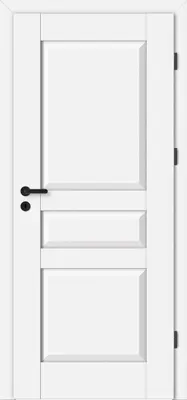
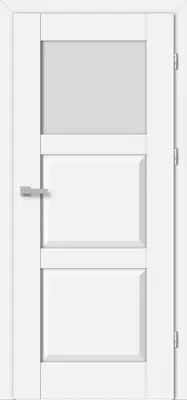
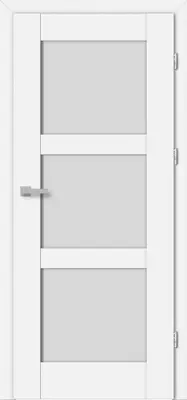
In Barański Optimo doors, we use high-quality refined paper films (CLPL) and synthetic polypropylene films (PP)
In addition to density, other parameters of the veneer are also important, such as hardness, flexibility, and resistance to external conditions like ultraviolet radiation. In these cases, however, there are no simple solutions. Much depends on the door manufacturer itself—whether it prioritizes quality and selects materials that meet higher quality standards, or whether it settles for lower quality, which will only become apparent after a longer period of use. It’s worth remembering that the choice of a specific film may also be dictated by functional and aesthetic considerations, such as whether the material has sufficient flexibility to allow for the creation of interesting designs tailored to specific door models.
In Barański doors, we use synthetic veneers of the highest quality
In Barański products, we use several types of veneers—depending on the door line. For Barański Smart, these are PVC films, i.e., made of polyvinyl chloride. For the Barański Optimo line, we use CLPL (coated paper laminates) and PP (polypropylene synthetic films). Our choice is primarily dictated by the specific characteristics of these materials and their functional qualities. For example, CLPC and PP are more flexible than PVC, so we use them when we want to create more interesting, sophisticated veneer designs.
All of our films are characterized by a higher basis weight, which increases their durability and resistance to damage. For example, for interior doors from the Optimo series, the weight range is 100–140 g/m². Meanwhile, many manufacturers use films with a weight in the 50–60 g/m² range, which are characterized by significantly lower strength. We pay attention not only to the thickness of the material but also to other quality parameters. All our films come exclusively from trusted sources, primarily from reputable manufacturers in Italy and Germany.