 EN
 PL (PL)

French doors are becoming an increasingly popular interior design element, although they are often not known by that name. Today, they are most commonly installed as patio doors, but they are also being chosen more and more often for spacious interiors. Why is that?
“Window and door”—this is how French doors are often described. No wonder, since this design can literally function as a window due to its lightweight construction and glazing that extends nearly the entire height. That’s precisely why they’re so often chosen as exterior doors leading to a patio, although in the United States they’re also a popular choice as entry doors to spacious entryways. Why are these doors a great choice for more distinctive interior designs?

The History of French Doors
The first French doors were, of course, created in France at the turn of the 16th and 17th centuries. Back then, long before the invention of the light bulb (or even electrification!), this design was more functional than aesthetic, although, of course, care was also taken to ensure their visual appeal. The large glass panels allowed for truly ample lighting in dark rooms, especially those with insufficient windows or none at all.
French doors are also called “porte-fenêtre” (in French, “porte” means door and “fenêtre” means window) or “balcony windows.”
What are the characteristics of French doors?
This type of door is most easily recognized by its construction—they are double-leaf designs. They can be opened traditionally or installed in a sliding system. The second distinctive feature is the aforementioned glazing that extends nearly the entire height of the door. From a distance, such doors do indeed resemble a tall window, hence the common practice of referring to them as “windows and doors in one.”
Where are French doors best suited?
French doors are particularly popular as exterior doors in the United States and Canada—you can often see them in movies and TV shows set across the ocean. In Poland, this type of door is typically chosen as an interior door or an exterior door leading to a patio or the backyard. In this case, opt for a model with tempered glass, which is resistant to mechanical damage. Wooden doors themselves are safe, as long as you ensure the glazing is of the right quality.

Double-panel glass doors are a great choice for loft-style interiors—they work well in settings such as:
- Hampton;
- Scandinavian;
- rustic;
- boho;
- glamour.
Single-panel models, on the other hand, can beautifully enhance modern interiors where you want to let in more natural light. They’re the perfect choice for a living room or kitchen, for example.
Keep in mind, however, that this solution—even in a sliding system—requires significantly more space than classic doors; in apartment buildings, single-panel designs are generally the only practical option.
French doors are also often used solely as windows, secured from the outside with a railing. This solution allows you to quickly ventilate and brighten a room, even if there is no balcony for the French doors to open onto.
French doors are a great choice for spacious, bright rooms—not only will they highlight your interior design, but above all, they’ll bring more light into a room or hallway. They’re also a good solution if you’re looking for a stylish way to access a patio that lets you enjoy the view outside the window. Keep in mind, however, that these doors require a lot of space and won’t work well in small, cramped rooms.

French Doors in the Barański Drzwi Collection
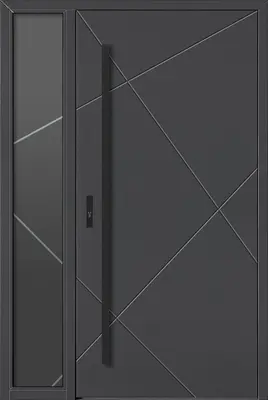
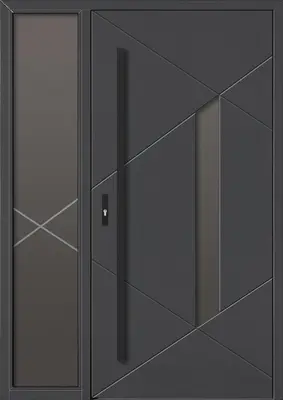
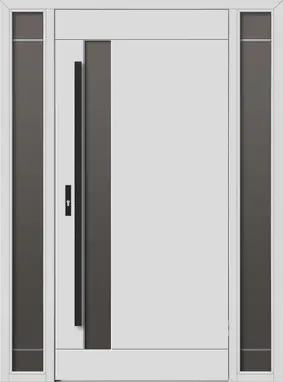
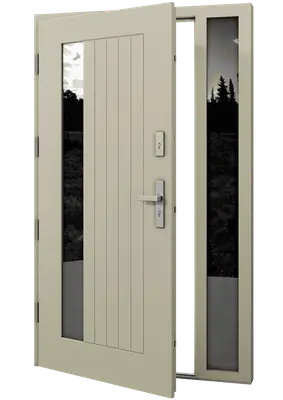
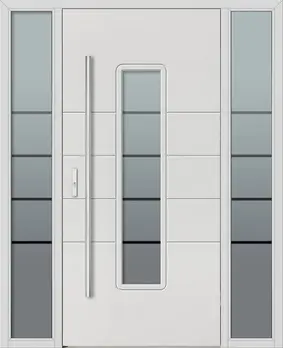
Our selection includes French doors of every type. For exterior models, we recommend the SIMPLE collection. If you’re looking for a minimalist and modern style, check out models DB 289, 290, 291, 278, 293, and 279. More classic and understated models include the DB 285, 266, and 298. For interior doors, we recommend the BARON line and glazed solutions, which will allow you to successfully create single-panel French doors.